
Building a future-proof business is no longer about predicting the future, it’s about preparing for constant change. The recent war in the region is a wake-up call for all. In a world shaped by global uncertainties, resilience and adaptability are the true competitive advantages.
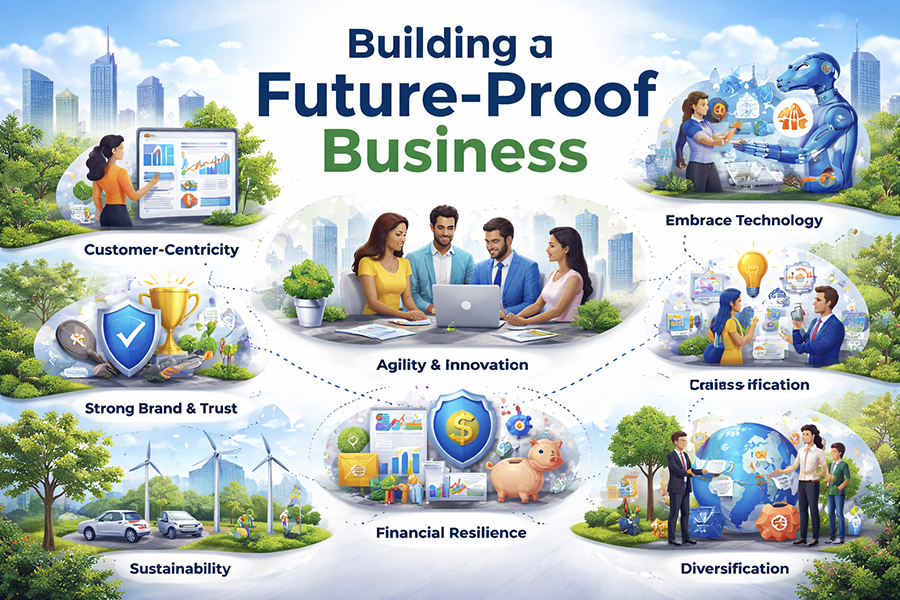
At the core of any future-ready business lies customer-centricity. Companies that deeply understand their customers’ evolving needs are better positioned to stay relevant. This requires continuous feedback loops, data-driven insights, and personalized experiences. Businesses must move beyond simply selling products or services and instead focus on solving real problems and creating lasting value.
Equally important is embracing technology and innovation. From Artificial Intelligence to automation and data analytics, modern tools enable businesses to operate more efficiently and make smarter decisions. However, adopting technology is not enough—it must align with strategic goals. Organizations should foster a culture of experimentation, where innovation is encouraged and failure is seen as a learning opportunity rather than a setback.
Another key pillar is agility in operations. Future-proof businesses are flexible in how they operate, allowing them to quickly respond to market changes. This may involve adopting lean methodologies, decentralizing decision-making, or building scalable systems. Agility also extends to workforce management, organisations should invest in upskilling employees and cultivating a growth mindset across teams.
Diversification plays a crucial role in mitigating risk. Relying heavily on a single product, market, or revenue stream can be dangerous in uncertain times. By expanding offerings, entering new markets, or leveraging multiple channels, businesses can create stability and open new growth opportunities. Digital channels, in particular, have become essential for reaching wider audiences and ensuring business continuity.
In addition, strong brand identity and trust are vital assets. In an era of information overload, customers gravitate toward brands they trust. Transparency, ethical practices, and consistent communication help build credibility and loyalty. A purpose-driven brand that stands for something beyond profit is more likely to resonate with modern consumers and sustain long-term relationships.
Financial resilience is another critical factor. Maintaining healthy cash flow, managing costs effectively, and planning for contingencies can help businesses weather economic downturns. Future-proof companies are proactive in scenario planning and risk management, ensuring they are prepared for both opportunities and disruptions.
Lastly, sustainability and social responsibility are no longer optional. Businesses must consider their environmental and social impact as stakeholders increasingly demand accountability. Sustainable practices not only contribute to a better world but also enhance brand reputation and long-term viability.
Building a future-proof business requires a balanced approach—combining innovation with stability, agility with strategy, and growth with responsibility. Those who remain adaptable, customer-focused, and purpose-driven will not just survive the future—they will shape it.
Contributed by GuestPosts.biz